

How To Restore Windows 7 From Backup Disc
Z7_3054ICK0KGTE30AQO5O3KA30N0
hp-concentra-wrapper-portlet
 Deportment
HP PCs - Creating and Using a System Image to Restore Your Computer (Windows 7)
This document pertains to all HP and Compaq computers with Windows 7.
A organisation epitome is a copy of all data on a bulldoze volume. If the difficult drive fails or critical software files become corrupted, such as when a computer virus infects a organisation, Y'all tin can restore all of your files the organisation image to return the contents of your computer. Past default, a system image includes the drive(s) required for Windows to run. Information technology includes Windows, your system settings, programs, and files. When restoring a reckoner from a system paradigm, y'all cannot choose individual items to restore. All of your electric current programs, organisation settings, and files are replaced with the contents of the system image.
annotation:If you are only concerned most protecting your important files, use Windows Backup tool. Windows fill-in is faster and uses less space because it does not back up all data on the hard drive. For more information on using Windows Fill-in, see Backing Up Your Files in Windows vii.
Creating a system image in Windows 7
To create a system prototype backup for your computer, follow these steps:
-
Click Start
 , so click Control Panel.
 -
Nether Organization and Security, click Back upwards your calculator.
The Backup and Restore Center opens.
-
Click Create a organisation prototype.
Figure : Creating a system image

Windows looks for available backup devices, such as a hard drive, DVD burning drive, or network bulldoze.
-
Choose the location to save your organization image, and then click Next.
-
On a hard disk
-
One or more DVDs
-
On a network location
warning:
Do not salvage the backup to the recovery partition: FACTORY_IMAGE or Recovery. Doing so corrupts the HP Recovery information.
-
-
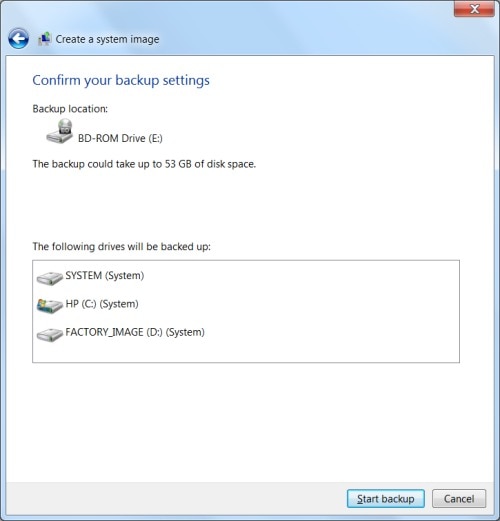
Confirm the settings, and so click Start fill-in.
notation:
Make sure that y'all have enough blank infinite on the external drive or enough blank DVDs to create the organization image.
Figure : Confirm your backup settings
-
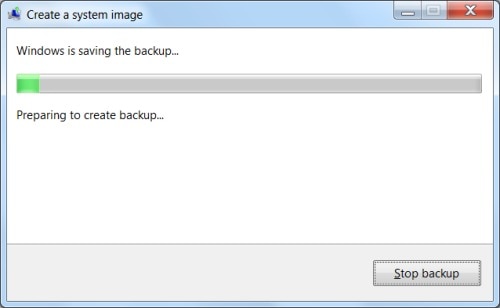
Windows prepares to create the system image.
Figure : Preparing to create the system image
-
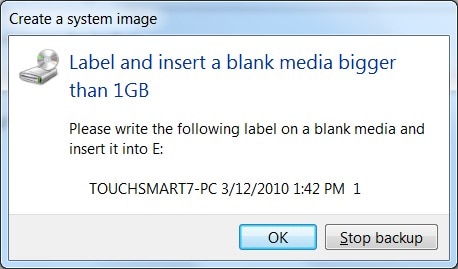
If you are bankroll upward to DVD, label and insert a bare DVD in the DVD recorder.
Figure : Labeling and inserting blank media
-
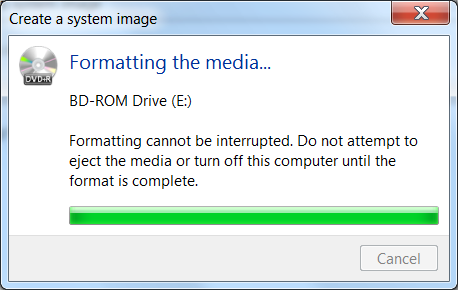
If you are backing upwards to DVD and a bulletin displays requesting to format the DVD, cull to format the DVD.
Figure : Formatting the media
-
Windows saves the system prototype.
Figure : Saving the system image

-
If using DVDs, when prompted, characterization and insert a blank DVD. Continue to follow the on-screen instructions until the prototype is complete. This might take from several minutes to several hours. Store the fill-in in a rubber identify.
Restoring the estimator from a system paradigm in Windows 7
To replace all of your electric current programs, system settings, and files on a failed calculator from a system prototype, use the following steps:
-
Click Kickoff
, so click Control Console. -
Under System and Security, click Dorsum upwards your computer.
The Backup and Restore Center opens.
-
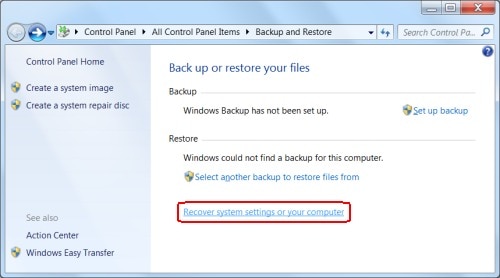
Click Recover system settings or your estimator.
Figure : Backup and restore
-
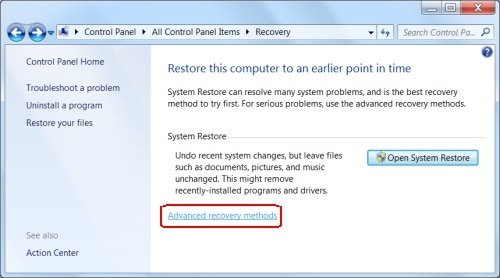
Under Arrangement Restore, click Advanced recovery methods.
Effigy : Advanced recovery methods
-
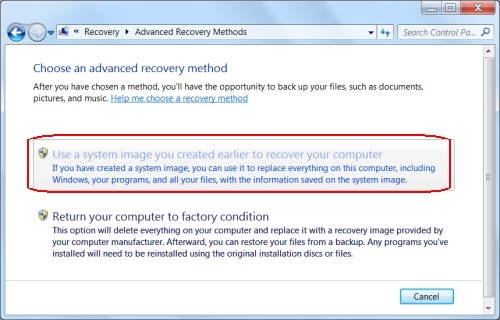
On the Advanced Recovery Methods page, click Utilise a arrangement epitome you created before to recover your reckoner.
Figure : Restoring from a system paradigm
-
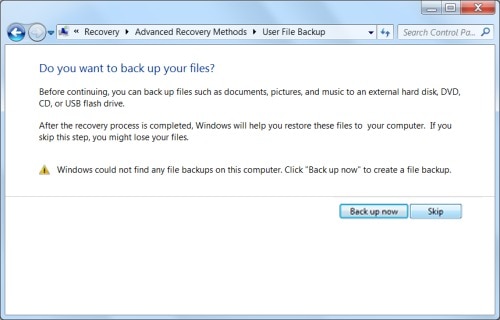
Before restoring from the system paradigm, support your files such as documents, pictures, and music to an external hard disk drive, DVD, CD, or USB flash bulldoze. Afterwards the recovery process is complete, Windows prompts to restore these files.
If you have created whatsoever files since you created the system paradigm disks, you should click Support now to save copies of your recent files.
If you have a current support of your files, click Skip.
Figure : Backing upwards your files
-
Click Restart to go along the recovery.
Effigy : Restarting the estimator

-
If the arrangement image files are on a CD or DVD, insert the starting time CD or DVD into the disc bulldoze.
If the files are on an external hd, connect the hard disk drive to the reckoner.
-
When Windows restarts, choose your keyboard input method, so click Next.
note:
If your system image is saved on DVDs and Windows cannot notice the system image file, remove the first disk in the gear up and insert the last disk in the set up. So click Retry.
-
Click Use the latest available system paradigm (recommended), and so click Next.
-
On the Choose additional restore options page, click Side by side.
-
On the confirmation page, click Finish. Then click Aye. Windows begins to restore the estimator.
-
If using DVDs, insert the requested disk when prompted, and so click OK. Follow the on-screen directions to completely restore the computer. This might have from a few minutes to a few hours. When Windows is finished restoring the computer, it automatically restarts.
-
If you created a user file backup before restoring the computer, you can restore those files now by clicking Restore my files, and following the on-screen instructions.
Source: https://support.hp.com/us-en/document/c02053303
Posted by: strobelforombity91.blogspot.com
0 Response to "How To Restore Windows 7 From Backup Disc"
Post a Comment